


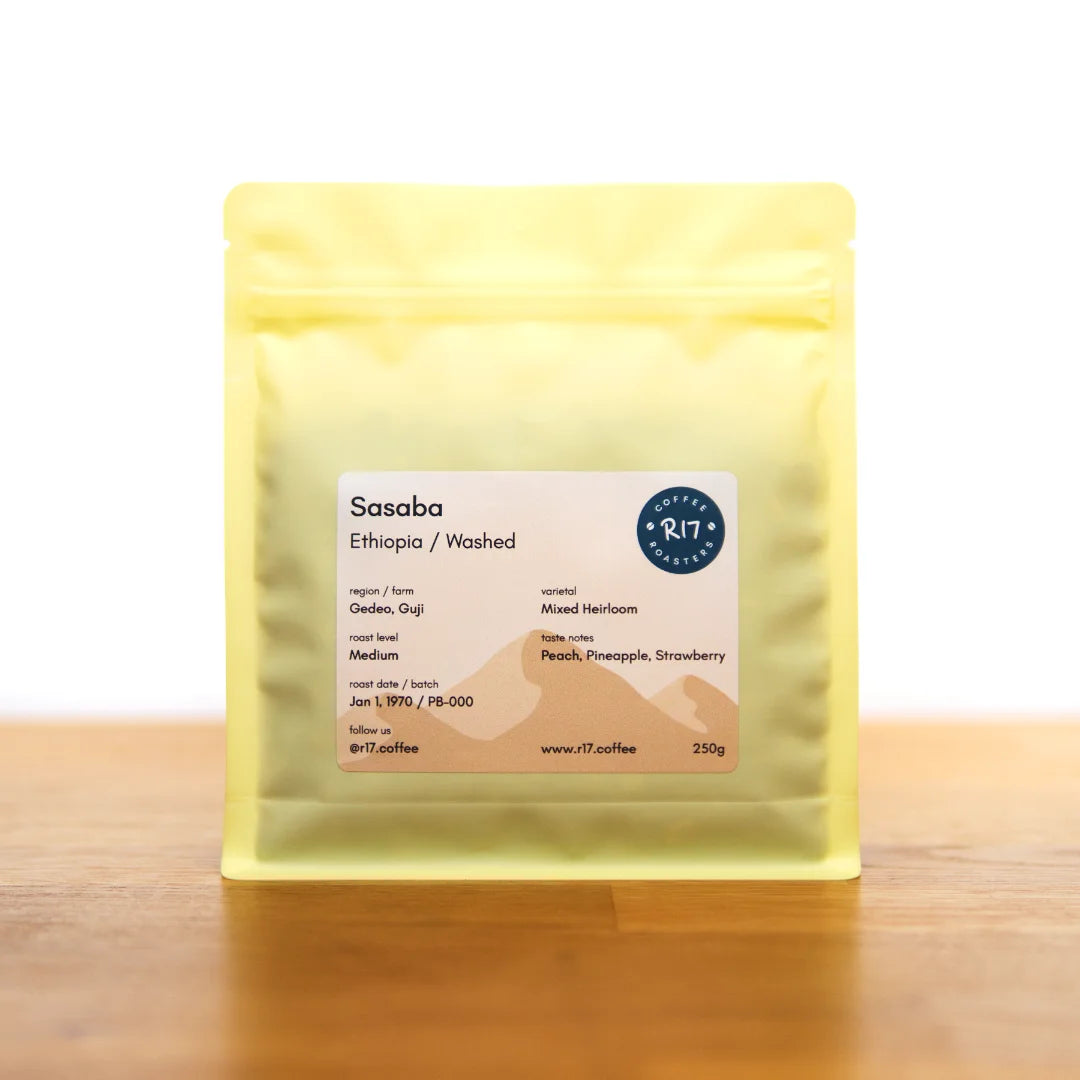
Sasaba
Sasaba
Peach, Pineapple, Strawberry
Ethiopia, Gedeo and Guji, Sasaba Washing Station – A washed coffee with a peach, pineapple, and strawberry profile, delivering a cup that is lively and vibrant.
Couldn't load pickup availability
Brewing
Brewing
Shipping
Shipping
➝ Free shipping in the Netherlands on orders over €50
➝ Free shipping to Belgium, Germany & France on orders over €100
➝ We ship freshly roasted coffee, 1–14 days from roast
➝ Orders go out every Monday, Wednesday & Friday via PostNL
➝ NL deliveries usually arrive the next day


About Sasaba Washing Station
Head south on the Addis Ababa-Moyale highway, keep going past Yirgacheffe and drive through the otherworldly cloud-crowned mountains of the area, and you’ll eventually make it to the bustling little town of Bule Hora.
Snaking away from Bule Hora are older roads – strikingly different from, and much more challenging than, the new highway that leads to them – that carry you on muddy paths to verdant hills and green fields.
It is around this fertile area of Kercha district that Tsegay Hagos Tesfaye, founder and owner of Sasaba, has established two washing stations and mills that Trabocca sources from – one of which is Sasaba.
Equipped with a large pulper and over 600 African drying beds, Sasaba processes coffee received from over 500 smallholders working in the hills surrounding the wet mill. Like much of Kercha, the small plots of land around Sasaba sit at high altitudes around the 2000-meter mark.
About the Farmers
The Sasaba smallholders are a mix of Gedeo and Guji farmers, many of whom have lived here for generations, growing coffee next to each other. Similar to the rest of Kercha district, most of the farmers identify as Protestant Christians in this area. Their coffee grows on the slopes of the hills around Sasaba shaded by a mix of existing forest trees and those planted by the farmers, such asenset (false banana) trees.
The Sasaba mill makes it a point to work with the more experienced farmers in the area. These are farmers that have been well-trained and have proven that they consistently produce high-quality coffee. Working alone, it would be harder for these farmers to market and sell their coffee. In the past, they would have sold their freshly picked red cherries directly to private traders in the area at low rates.

About the Processing
At Sasaba washing station, the red cherries are collected from late October until December and brought to the Sasaba washing station. Cherries, intended for washed processing, are processed on-site and fermented for about 48 to 72 hours before they are placed on the drying beds for around 7 to 8 days. The natural coffees are usually dried for 15 to 20 days.
Technical Information
-
Region
Guji
Processes
Natural, Washed
Varieties
Mixed Heirloom -
Altitude
2150 - 2150 masl.
Producer
Tsegay Hagos Tesfaye -
Cupping notes
Peach
Pineapple
Strawberry
This coffee is sourced through our importing partner Trabocca